Book I: The White Gold
Before there is a "sharp," there is rain. And before there is a legend, there is a very real, very physical miracle: milk. This liquid is not a commodity; it is a passport stamped by the land itself.
The Rain and The Rivers
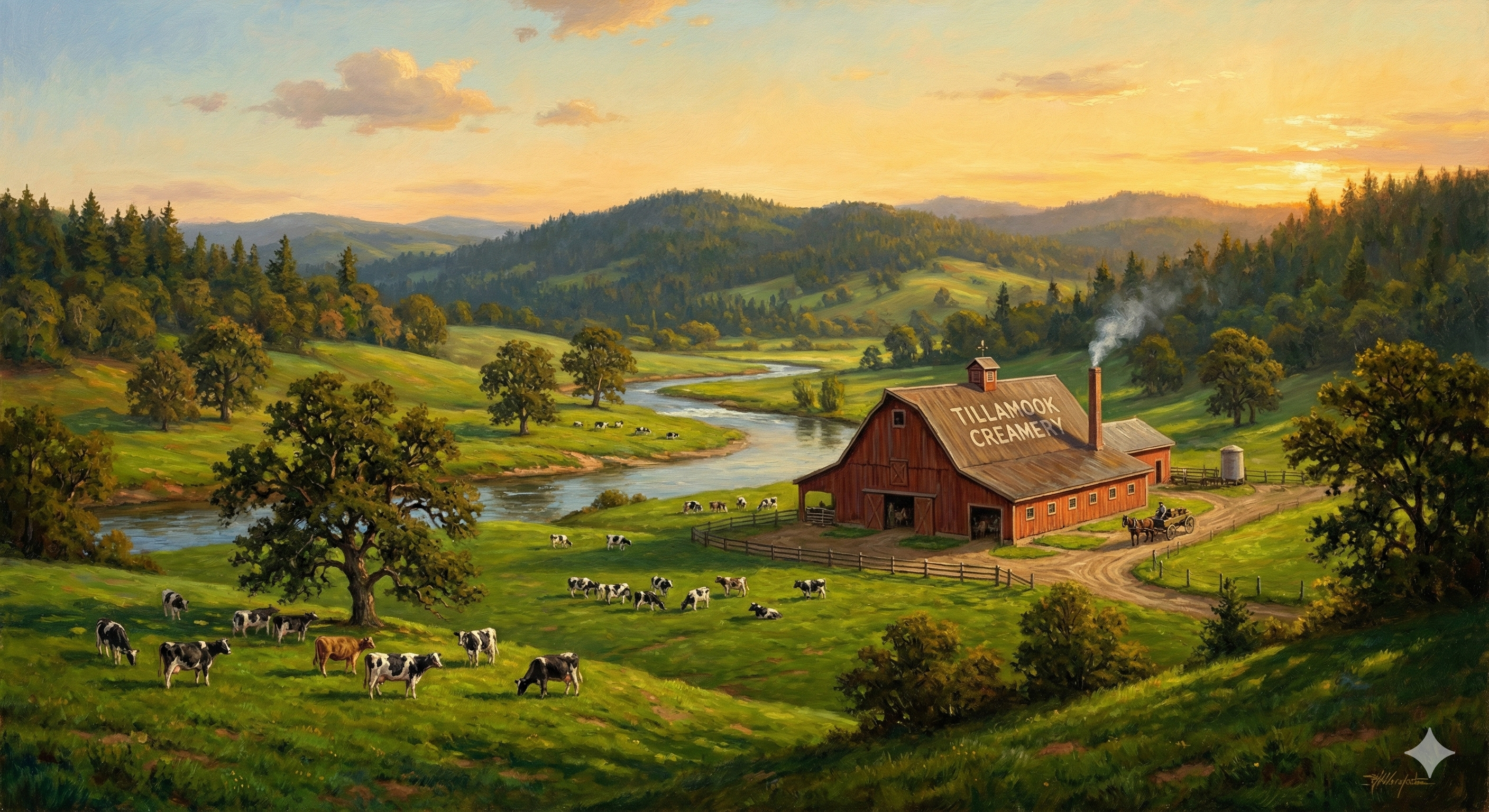
Tillamook County does not merely receive rain; it curates it. With an average of 90 inches per year, the sky is the first ingredient. This deluge feeds the watershed, channeling through the five great arteries of the region—the Miami, Kilchis, Wilson, Trask, and Tillamook rivers. These waters shape the lowlands, creating a lush, green bowl where the pasture never truly sleeps.
The Green Engine
The stage is set by the soil, but the lead actor is the grass. Specifically, Perennial Ryegrass (Lolium perenne). This cool-season forage is the engine of flavor—highly digestible and rich in energy. The cows do not just eat it; they translate it. They turn sunlight and rain into the "white gold" that forms the foundation of the cheddar.
The Alchemy of the Herd
The milk itself is a deliberate composition. The herds are a symbiotic blend of two distinct lineages:
- The Holstein: The champion of volume. They bring the abundance required to feed the world.
- The Jersey: The keeper of the soul. Their milk is denser, richer, and creamier, boasting butterfat levels that can reach 5.45% and protein levels around 3.8%.
It is this specific ratio of fat (the texture) and protein (the structure) that allows the cheese to age for years without crumbling into dust.
The Heat-Shock Doctrine
In the world of industrial dairy, efficiency is king. Ultra-pasteurization cooks the milk to 280°F, sterilizing it completely. It makes the milk safe, but it also makes it "dead"—the complex enzymes required for deep flavor development are destroyed.
Book II: The Transformation
To make "Cheddar" is a verb. It is a physical act of folding and stacking. It is more than cooking; it is a controlled milk heist—stealing solids from the liquid and locking them into a protein network designed to survive the ages.
The Cast of Characters
- The Starter Culture: Lactic-acid makers (Lactococcus lactis) that act as the master knob for pH.
- Rennet: The enzymatic "scissors" that snap the milk into a solid gel.
- Heat & Stirring: The "gym class" of cheesemaking, promoting the great whey escape (syneresis).
- Salt: The strict librarian. It slows the microbes, controls the party, and sets the rules for texture.
Act I: The Mission Begins
The vat is a construction site. Mesophilic lactic acid bacteria are introduced, beginning the slow drift of pH downward. This isn't just trivia—pH is the master variable that determines how minerals behave and how the final cheese will eventually melt. Next, the rennet is added at roughly 30°C, causing the protein clusters to link up into a firm coagulum in about 35 minutes.
Act II: The Great Whey Escape
The gel is broken on purpose. It is cut into 1cm cubes, triggering syneresis. The curd is then "cooked" by raising the temperature to 102°F (39°C). This heat firms the curd and encourages the whey to leave. Draining occurs at precisely pH 6.1, the tipping point where the curd is ready to be transformed.
Act III: The Cheddaring Dance
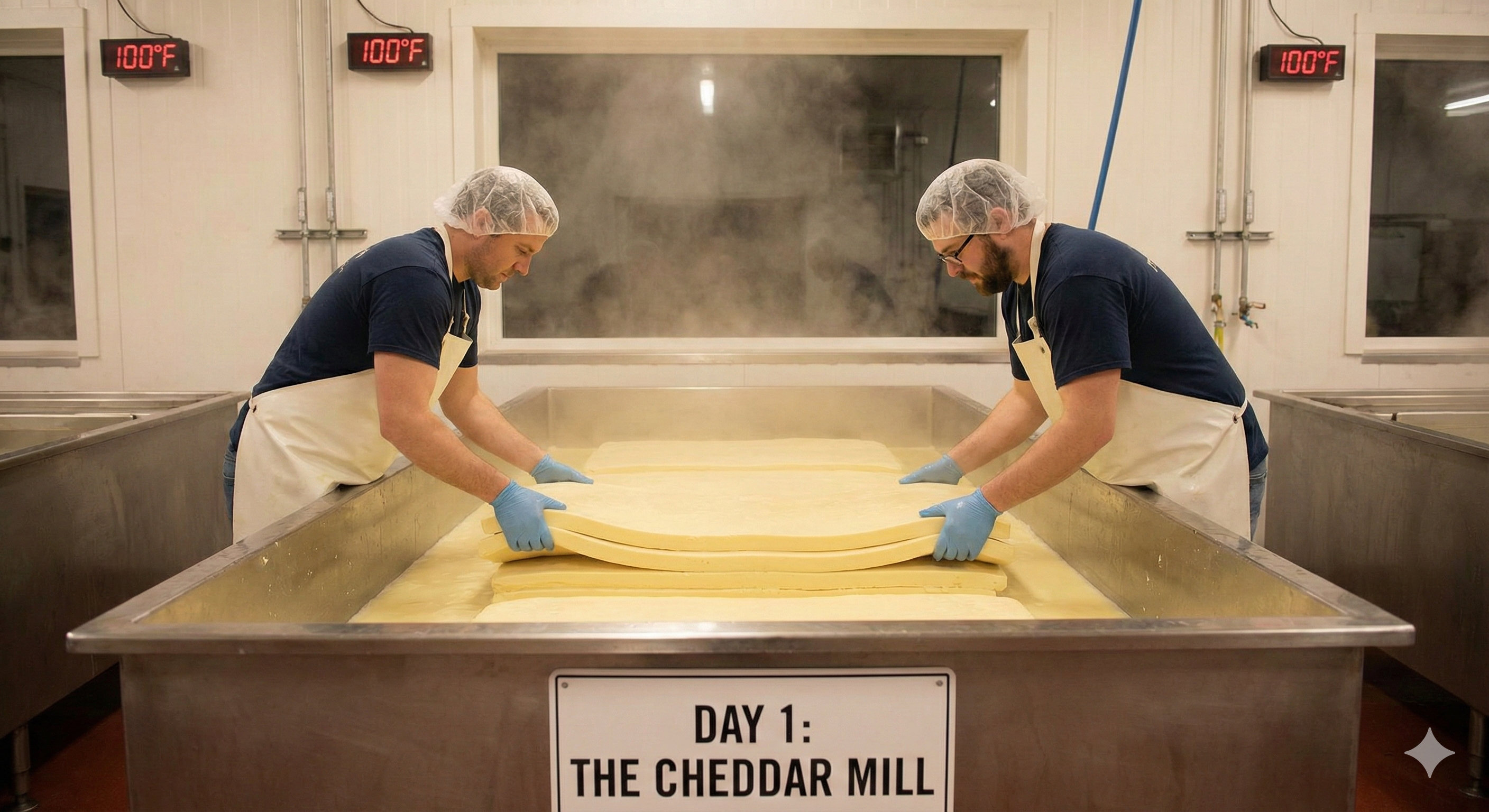
If cheddar were a dance, this is the part where the music drops. The mass is cut into slabs, then piled and handled to promote drainage. It is a staged, controlled "matting" process. Slabs of warm curd are stacked, flipped, and re-stacked. This weight stretches the protein structure, knitting the curds into a cohesive, dense mass with a texture like chicken breast. This density is the difference between a cheese that ages and one that rots.
Act IV: The Mother Loaf
Finally, the slabs are milled back into curds and the "Librarian" (salt) is introduced. The curds are pressed into 40-pound blocks. At Tillamook, these are known as the "Mother Loaves." They are not wheels; they are heavy, dense bricks, now fully prepared for the long dark of the warehouse.
Book III: The Long Sleep
The blocks go quiet. The warehouse goes cold. Imagine a room where the air feels like it’s holding its breath—no sizzling pans, no bubbling vats, just pallet after pallet of sealed cheddar blocks resting like books in a library.
The Ripening Store
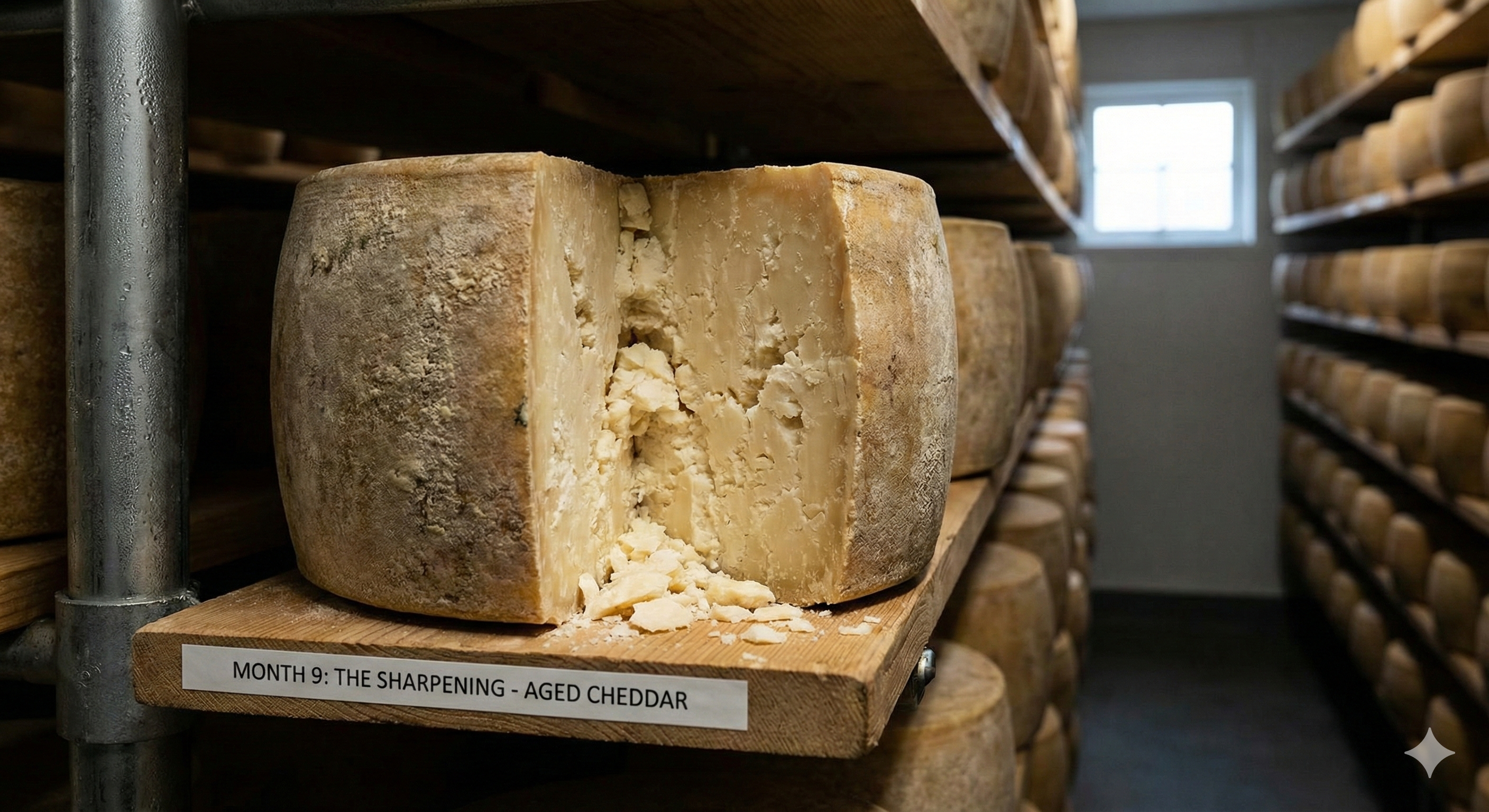
This is the "Long Sleep," but inside the blocks, a tiny, slow-motion revolution is underway. The temperature is strictly controlled, usually between 43–46°F (6–8°C). This cold is the "librarian"—it slows the chaos. While warmer temperatures could accelerate flavor, they risk off-flavors and defects. In this cool silence, flavor chemistry runs in slow motion.
The 60-Day Threshold
For the first two months, the cheese is "Medium"—a young cheddar learning to speak. Its texture is springy and its flavor is friendly. Because Tillamook uses heat-shocked milk, federal guidelines mandate a minimum of 60 days of aging at no less than 35°F. This ensures safety while allowing the flavor team to begin their work.
Proteolysis: Enzymes with Tiny Scissors
Ripening is a controlled breakdown. The headliner of this process is proteolysis—the systematic cutting of the casein protein network. Casein is the scaffolding, the "rope net" holding the cheese together. As the cheese sleeps, enzymes (from the rennet, the milk itself, and the starter bacteria) act like tiny scissors.
They snip the protein chains, turning a tight, bouncy mesh into something tender and complex. These cuts release peptides and free amino acids—flavor secrets that were previously locked away. This is how "rubbery" becomes "crumbly," and how simple milk becomes a masterpiece of savory, nutty, and sharp notes.
Book IV: The Awakening
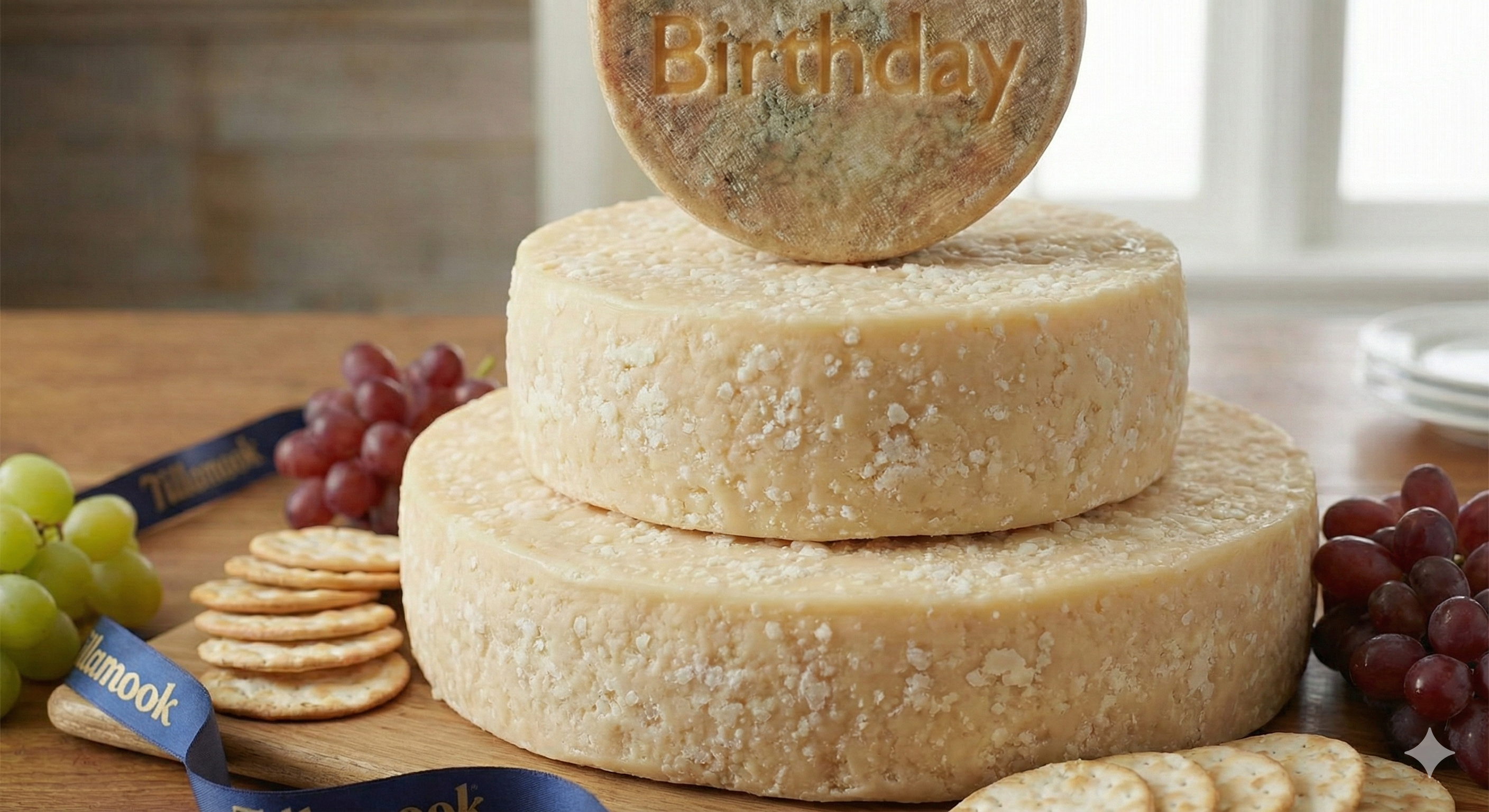
As the clock ticks past 9 months, the cheese graduates from "Sharp" to "Extra Sharp." It enters its final form not by adding ingredients, but by subtracting structure.
The Flavor Wizard: Lactobacillus helveticus
This is where the magic of Lactobacillus helveticus reveals itself. This specific adjunct culture is a master of flavor. It reduces bitterness and accelerates the breakdown of proteins into savory, brothy notes of nuttiness and sweet cream. It turns the "volume" of the cheese up to eleven.
• 9 Months: "Sharp." Tangy, complex, but still smooth.
• 15-24 Months: "Extra Sharp." Crumbly, intense, and studded with crystals.
• 3+ Years: "Vintage." A flavor bomb. The texture is almost dry, like aged parmesan.
The Geometry of the Crunch
And then, the crystals appear. They are not salt. They are geological evidence of time.
- Tyrosine Crystals: As proteins shatter, the amino acid Tyrosine is liberated and clusters together into hard, crunchy white pearls.
- Calcium Lactate: Lactic acid marries with calcium to form a softer, white haze on the surface of the cheese.
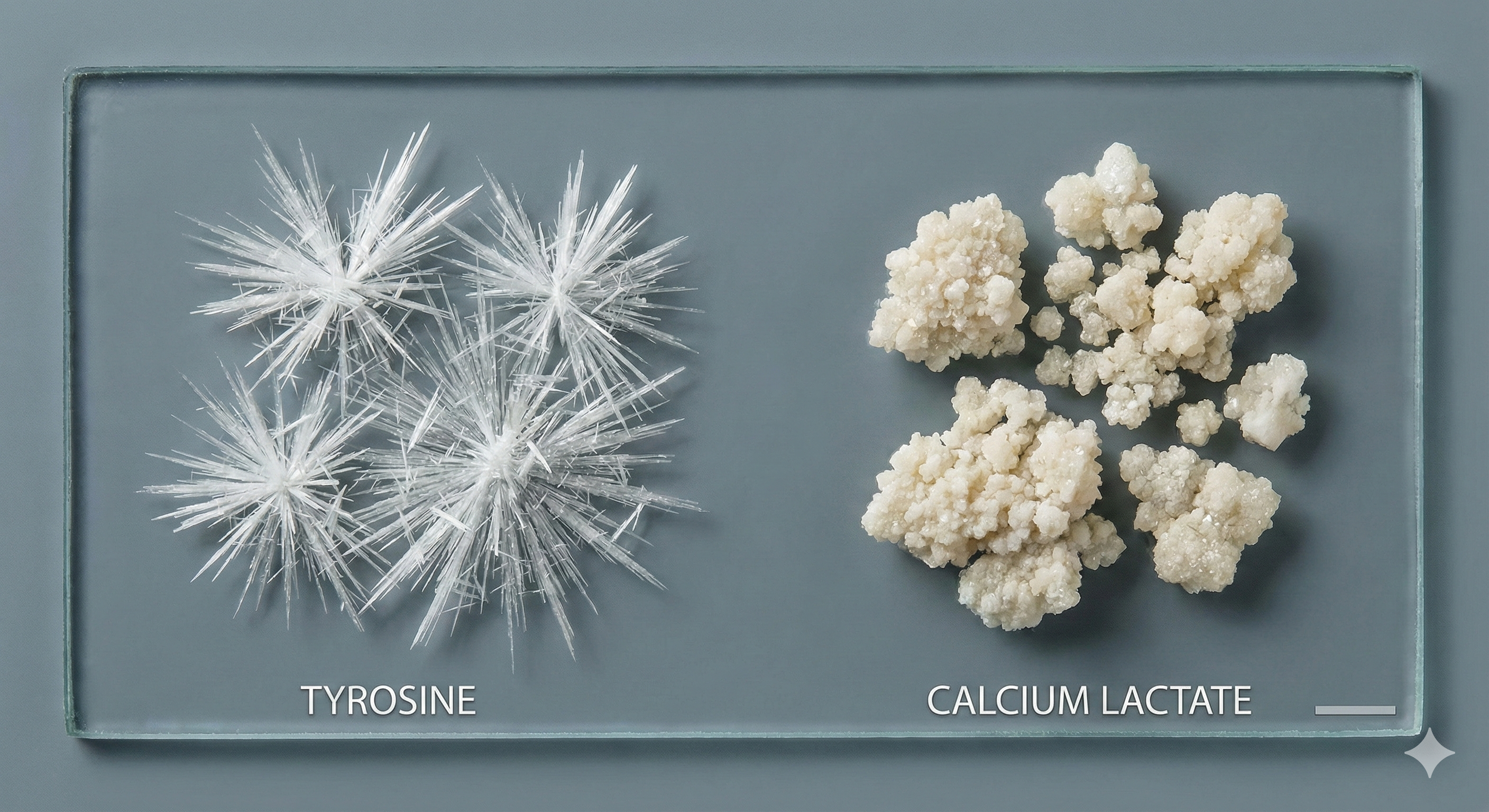
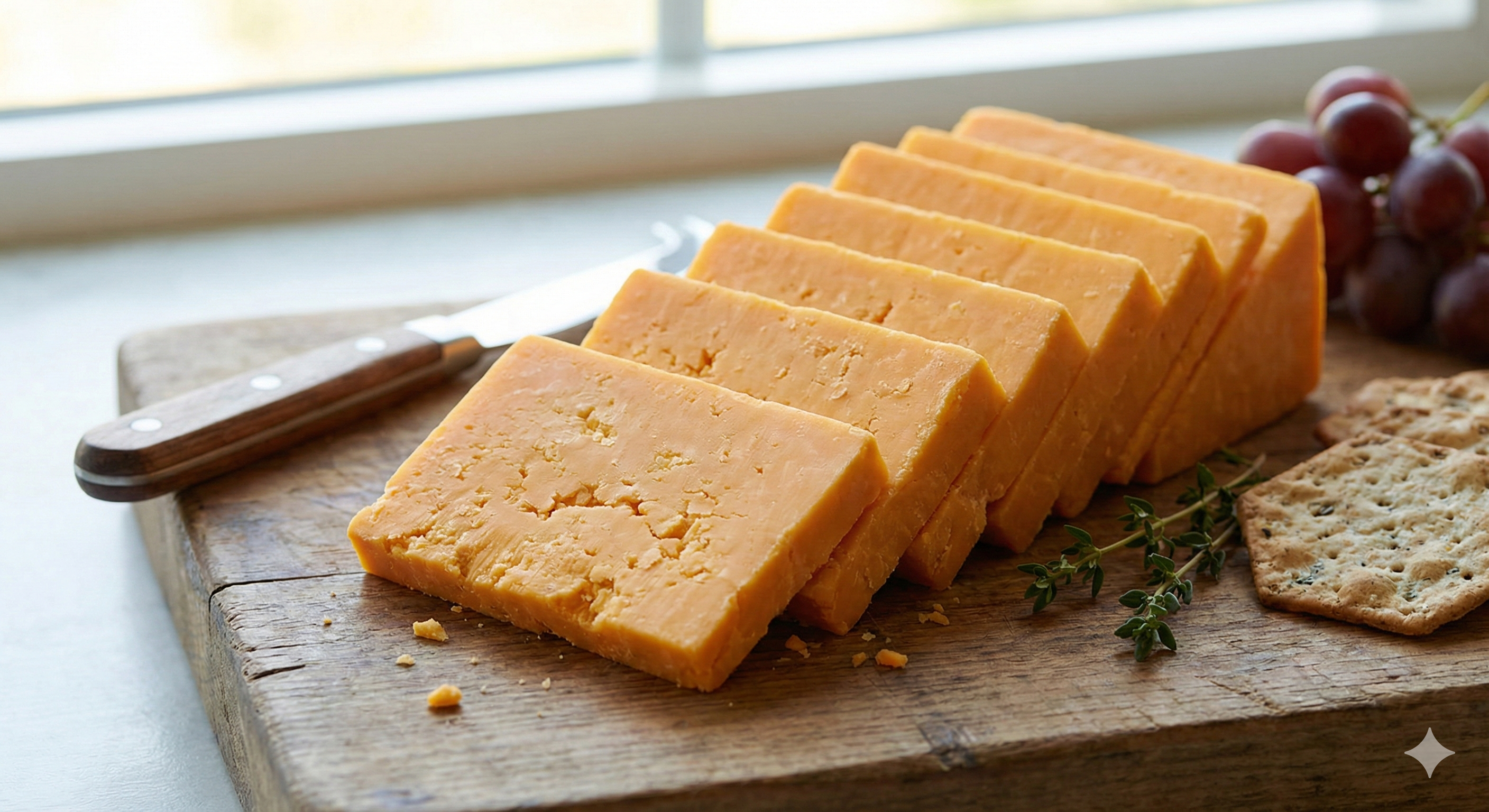
When you bite into a slice of Tillamook Vintage Extra Sharp, that crunch is the sound of time itself. It is the physical proof that the cheese has survived its long sleep and emerged as something greater than milk. It has become a relic of the coast, a masterpiece of the cooperative, and the undisputed king of cheddar.