Historically Documented
- Construction Began: September 1854. A true community effort using local timber and salvage from shipwrecks.
- Completed: December 29, 1854.
- Maiden Voyage: January 5, 1855.
- Cargo: Tons of dairy products and seafood to Astoria and Portland; supplies returned.
- Fate: Wrecked in 1860 in the Strait of Juan de Fuca.
A Vessel Built by Farmers
They were men of the soil, not the sea. Yet, the Oregon Encyclopedia records that "every member of the community helped assemble" the vessel. They felled local spruce and Douglas fir, dragging the timber to the water's edge. They scavenged ironwork and rigging from shipwrecks that had met their end on the very coast they sought to conquer.
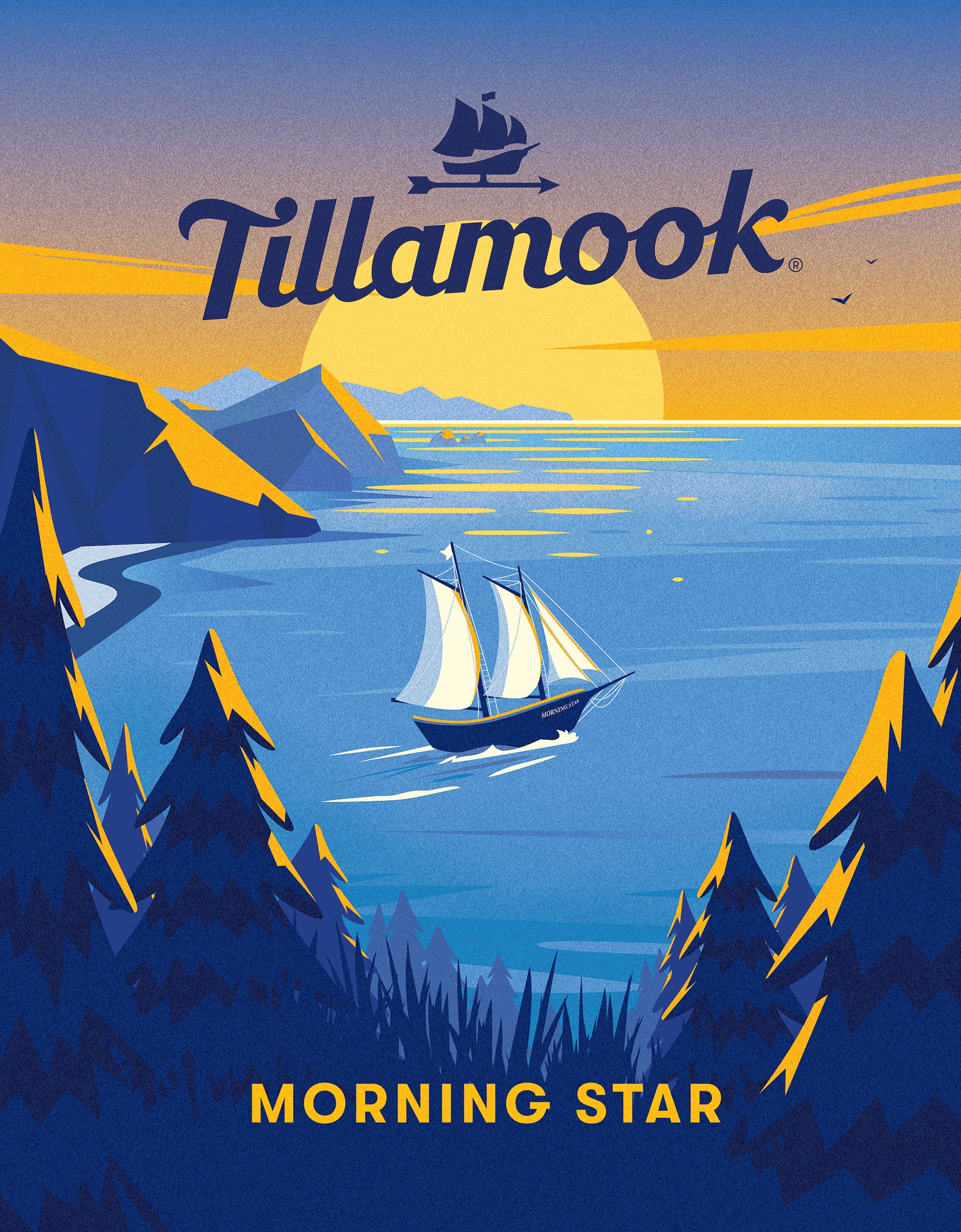
They christened her the Morning Star. The name was not an accident of poetry; it was a declaration of intent. They believed this small, two-masted schooner was "the harbinger of a new day" for the county. A literal dawn breaking over their isolation.
Mud, Tallow, and Destiny
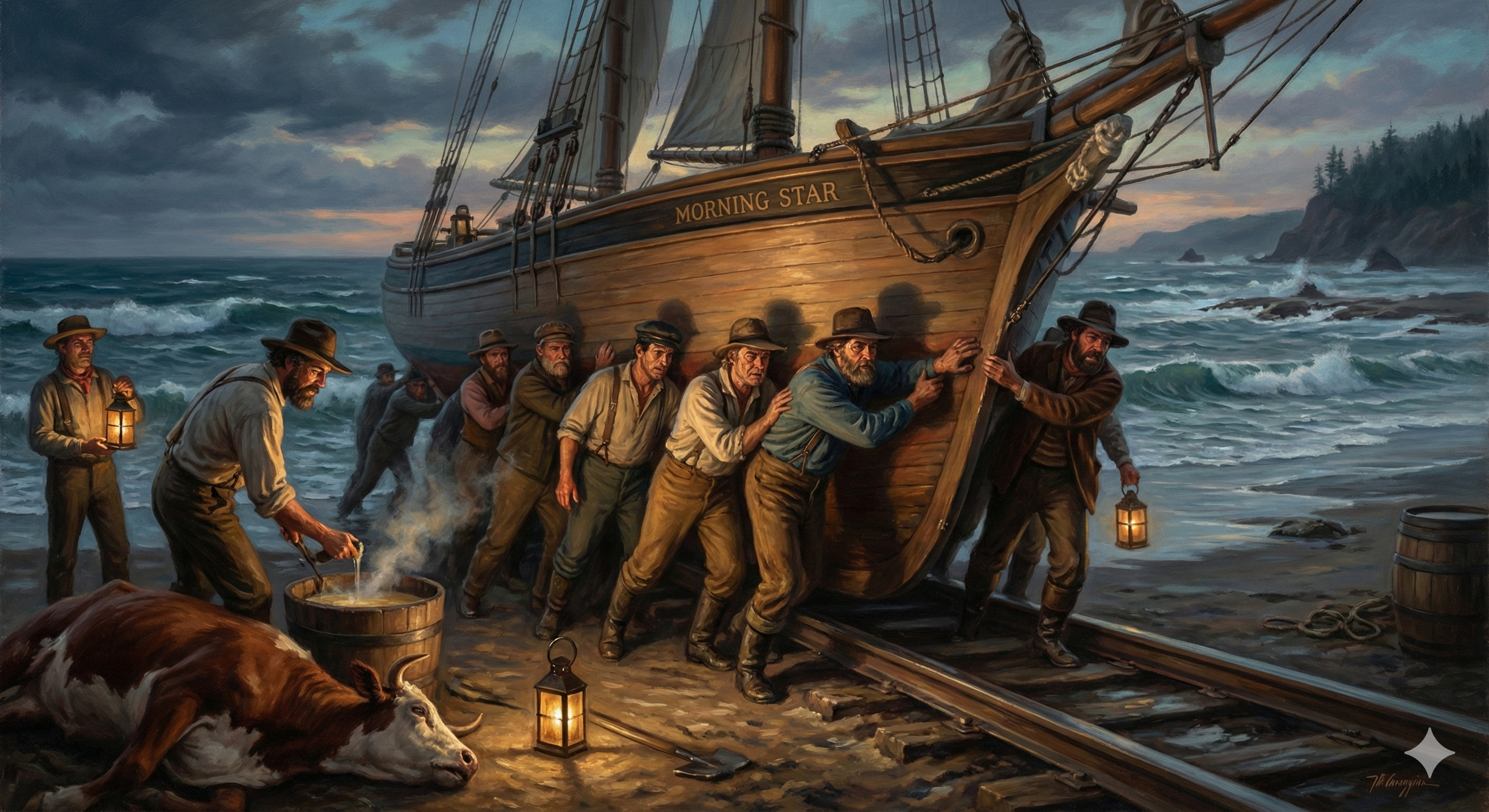
The story of her launch has become the signature legend of the region, a testament to the grit required to survive on the frontier. When the ship was finally ready on the skids, they attempted to slide her into the water using estuary mud as grease.
She did not move. The mud failed. The dream of export sat heavy and motionless on the shore.
In a final act of commitment, the community sacrificed a steer. They rendered its fat into tallow, boiling and slick, and poured it onto the skids. This was not just engineering; it was a blood offering to commerce. On a path greased by the very livelihood they sought to export, the Morning Star finally slid into the bay.
"She slid into the water not by the grace of engineering, but by the fat of the land."
The Lifeline
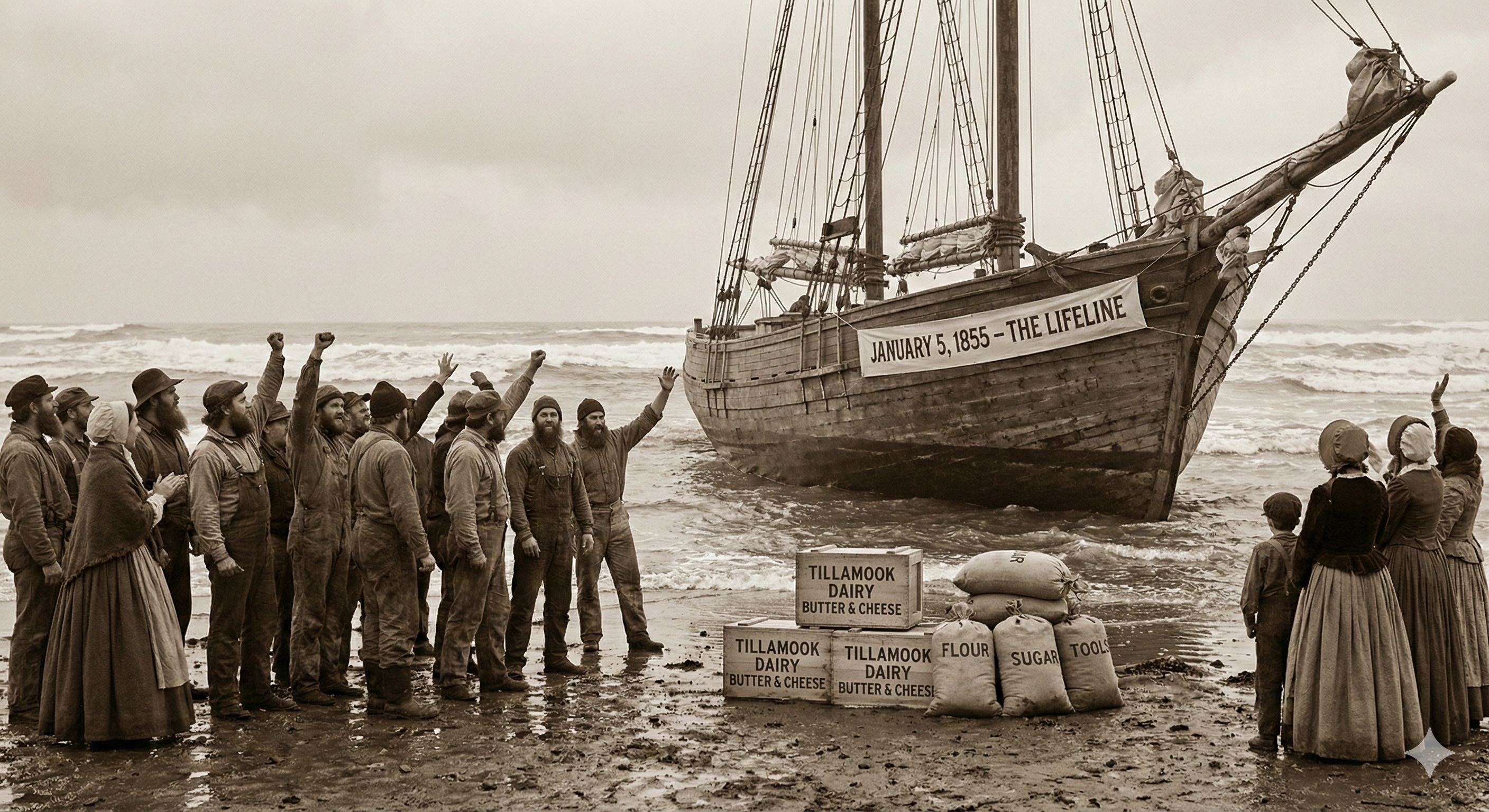
On January 5, 1855, she crossed the bar. She carried the first commercial load of Tillamook dairy—butter and cheese—out to the markets of Astoria and Portland. She returned with flour, sugar, and tools. For a year and a half, she was the heartbeat of the county, the only thing connecting the valley to the world.
A Lasting Symbol
Though the original ship was sold and eventually lost in 1860, her spirit never drowned. In 1909, when the Tillamook County Creamery Association was formed, they did not forget the vessel that saved them. When their packaging was redesigned in 1966, a rendition of the Morning Star became the central icon of the brand.
Today, that little boat on the package is not just a logo. It is a memory. It reminds us that this cheese is not merely a product of milk, but of desperation, sacrifice, and the iron will of a community that refused to be cut off from the world.